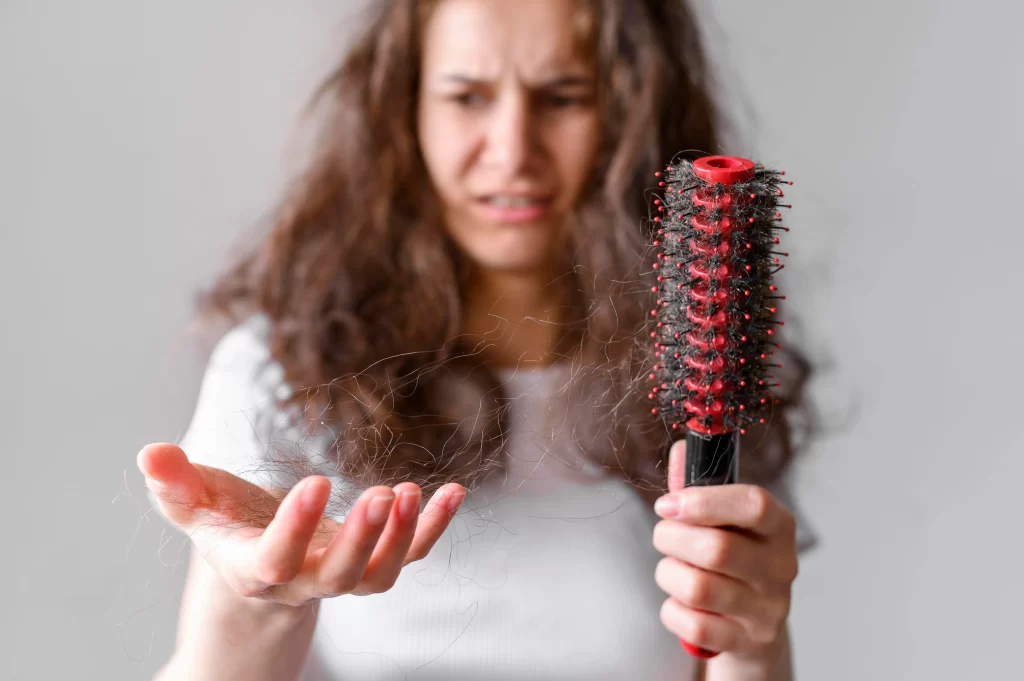
Hair breaking and not growing, you probably know how frustrating it can be to deal with it—even when you follow a good hair care routine. Many people start wondering why their hair keeps breaking and what simple steps can help make it stronger. In this guide, we’ll share practical tips on how to prevent hair breakage and solutions for healthier, stronger hair.
With the right hair care habits, simple home remedies, and proper nutrition, you can help strengthen your hair and reduce breakage. Common causes include poor diet, frequent heat styling, chemical treatments, tight hairstyles, and daily stress, which can weaken hair strands over time.
Also Read: Lose Weight in 15 Days With Jeera Water
What Deficiency Causes Hair Loss and Breakage?
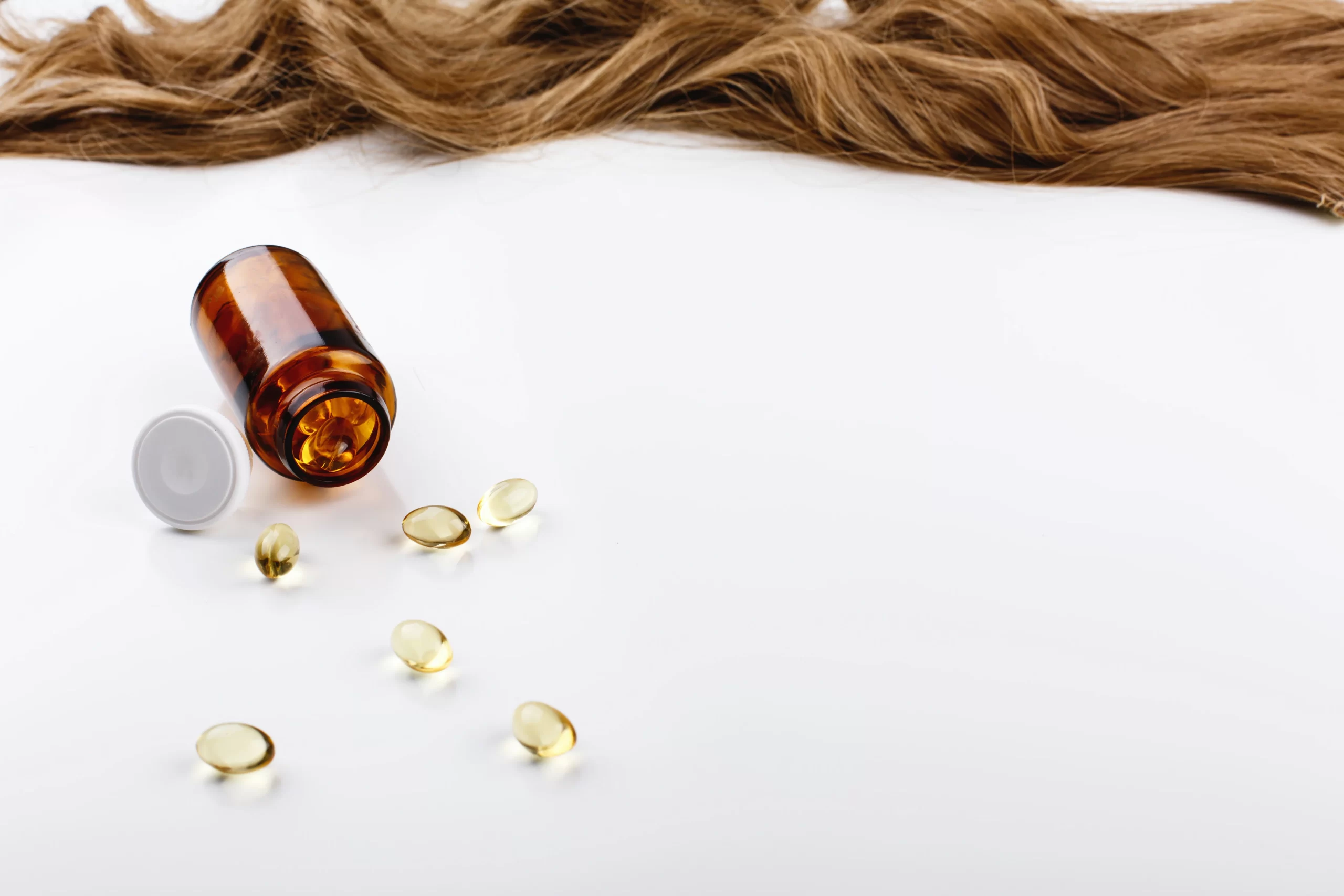
Hair health isn’t only about shampoos and oils—it largely depends on internal nutrition. There are essential vitamins to stop hair breakage that can be considered as top nutrients.
1. Iron Deficiency (Anemia)
Iron is crucial for oxygen supply to the scalp and hair follicles. Without enough iron, hair follicles weaken, leading to excessive shedding (telogen effluvium).
Sources: Spinach, lentils, red meat, pumpkin seeds.
2. Vitamin D Deficiency
Vitamin D helps create new hair follicles and stimulates growth. Low levels are linked to pattern baldness and thinning.
Sources: Sunlight, fatty fish, mushrooms, fortified dairy.
3. Biotin (Vitamin B7) Deficiency
Biotin supports keratin production—the protein that makes up hair. Lack of biotin leads to brittle hair and breakage.
Sources: Eggs, almonds, sweet potatoes, whole grains.
Also Read: Ultimate 2500 Calorie Meal Plan for Gym-Goers to Shred Fat
4. Zinc Deficiency
Zinc regulates hormones and aids protein synthesis for healthy hair growth. Deficiency can worsen shedding and thinning.
Sources: Chickpeas, pumpkin seeds, seafood.
5. Vitamin E Deficiency
An antioxidant that protects hair follicles from free radical damage and improves blood flow to the scalp.
Sources: Sunflower seeds, almonds, spinach, avocados.
6. Essential Fatty Acids Deficiency
Omega-3 and Omega-6 keep the scalp hydrated and hair elastic. Without them, strands turn dry and brittle.
Sources: Flaxseeds, walnuts, chia seeds, salmon.
Also Read: Mindfulness Yoga Benefits: A Life-Changing Daily Habit
How to Prevent Hair Breakage? – 5 Expert Tips
1. Hydrate & Nourish with the Right Hair Products
- Use sulfate-free shampoos for gentle cleansing.
- Deep-condition weekly with masks enriched with keratin, argan oil, or aloe vera.
- Apply leave-in conditioners or lightweight oils (like coconut or jojoba) to lock in moisture.
2. Limit Heat Styling and Protect from Damage
- Restrict heat tools to a maximum of 1–2 times per week.
- Always apply a heat protectant spray before blow-drying or straightening.
- Try heatless hairstyles (braids, rollers, buns) to minimize damage.
Also Read: Ultimate Scalp Care Routine for Strong Hair At Home
3. Detangle Gently
- Use a wide-toothed comb or detangling brush, especially on wet hair.
- Start combing from the ends upward to reduce pulling.
- Apply a leave-in conditioner or detangling spray for easier combing.
4. Protect Your Hair While Sleeping
- Switch to silk or satin pillowcases to reduce friction.
- Avoid tight hairstyles at night; instead, opt for loose braids.
- Use a satin scarf or bonnet to protect curls and reduce tangling.
5. Eat a Hair-Healthy Diet & Manage Lifestyle
- Protein-rich foods (eggs, lentils, nuts) for keratin production.
- Omega-3 fatty acids (salmon, flaxseeds) for scalp hydration.
- Iron, Vitamins A, C & D to promote stronger strands.
- Stay hydrated and manage stress with yoga, meditation, or exercise.
Conclusion
A good hair care routine for thick hair is not just about external products—it’s about combining the right nutrition, lifestyle, and gentle care practices. Preventing severe hair breakage and thinning requires consistency, hydration, and proper nourishment. If breakage persists despite these remedies, consult a dermatologist or trichologist, as underlying health issues may be the cause.
Also Read: 10 Amazing Cornstarch Benefits for Skin You Didn’t Know About